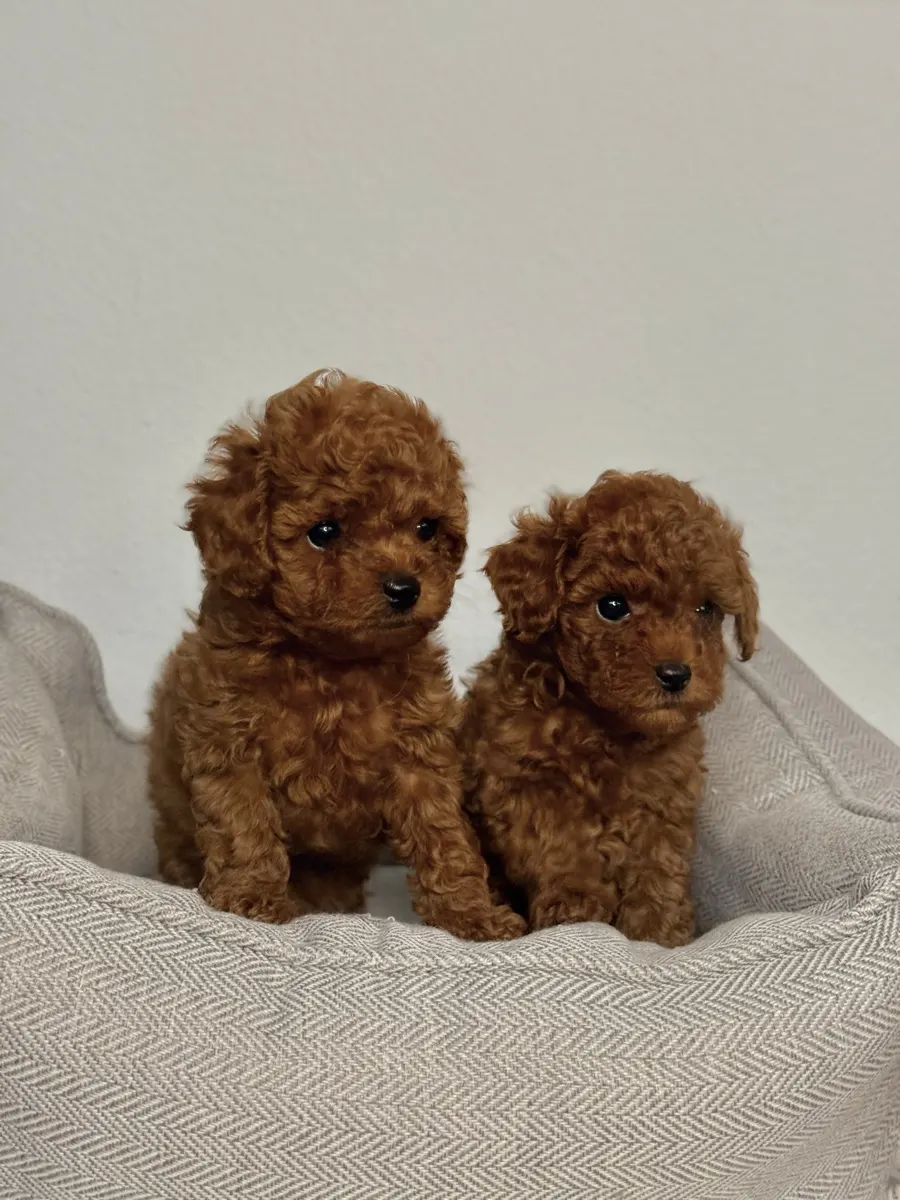
Yes — Toy Poodles are among the best small dogs for apartments and families. They're tiny, highly adaptable and bond closely with their people, so they're as happy in a city flat as in a house, and gentle and playful with a family. The one condition that matters more than square metres: a Toy Poodle needs its daily exercise and mental stimulation met, because a bored poodle is the one that barks. This guide is part of our complete Toy Poodle breed guide.
Lifestyle fit at a glance
Apartment: excellent — small, no garden needed · Family: affectionate, great with respectful kids (supervise toddlers) · Other pets: usually good when socialized · Exercise: 30–60 min/day + brain work · Noise: can bark if bored — manage with training.
Why Toy Poodles suit apartments
Their size is the obvious win — a Toy Poodle takes up almost no room and doesn't need a garden. But what really makes them good flat dogs is their temperament: they're calm indoors when their needs are met and they adapt easily to routines. The catch is that they're intelligent and people-oriented, so they need daily walks plus mental work rather than being left alone all day. Meet that, and you have a quiet, considerate apartment companion; neglect it and boredom shows up as barking and chewing. For the routine, see the care & grooming guide.
Toy Poodles with children
Toy Poodles are affectionate and playful, which makes them lovely family dogs — with one important caveat. They are tiny and fragile, so rough handling or a fall can injure them. With respectful children and supervised interactions they thrive:
- Always supervise play between a Toy Poodle and young children or toddlers.
- Teach children to be gentle — no grabbing, squeezing or picking the dog up unsafely.
- Give the dog a safe retreat (a bed or crate) where it can rest undisturbed.
Other pets, noise and neighbours
Well-socialized Toy Poodles usually get along with other dogs and cats; just supervise play with much larger dogs because of the size difference. On noise — the issue most relevant in a flat with close neighbours — Toy Poodles are alert and can bark when bored or under-socialized. It's very manageable: meet their exercise and mental needs, socialize them to everyday sounds and visitors, and teach a "quiet" cue. Our training & temperament guide covers exactly this.
Thinking about a Toy Poodle for your home?
Valivans raises red and apricot Toy Poodles in a family home in Valencia, Spain — socialized from birth with children and everyday life, so they settle into apartments and families with ease. Get in touch to learn more.
Frequently Asked Questions
Yes. Toy Poodles are small, adaptable and don't need a garden, which makes them excellent apartment dogs — as long as they get daily walks and mental stimulation. A bored Poodle may bark, so meeting their needs is what keeps them quiet, well-mannered flat companions.
Yes, with respectful children. Toy Poodles are affectionate and playful, but they are tiny and can be injured by rough handling, so interactions with young kids must be supervised. Teach children to be gentle and let the dog have a safe retreat, and they make wonderful family pets.
Generally yes. Well-socialized Toy Poodles usually get on well with other dogs and cats, especially when introduced calmly and early. Because of their small size, supervise play with much larger dogs to avoid accidental injury.
They can if bored or under-socialized, which matters more in a flat with close neighbours. The fix is meeting their exercise and mental needs, socializing them to everyday sounds, and training a quiet cue. A well-managed Toy Poodle is a quiet, considerate apartment dog.
Very little space, but real daily activity — about 30–60 minutes of walks and play, plus mental work. Their small size suits any home, from a studio to a house, provided you commit to that daily routine rather than relying on square metres.