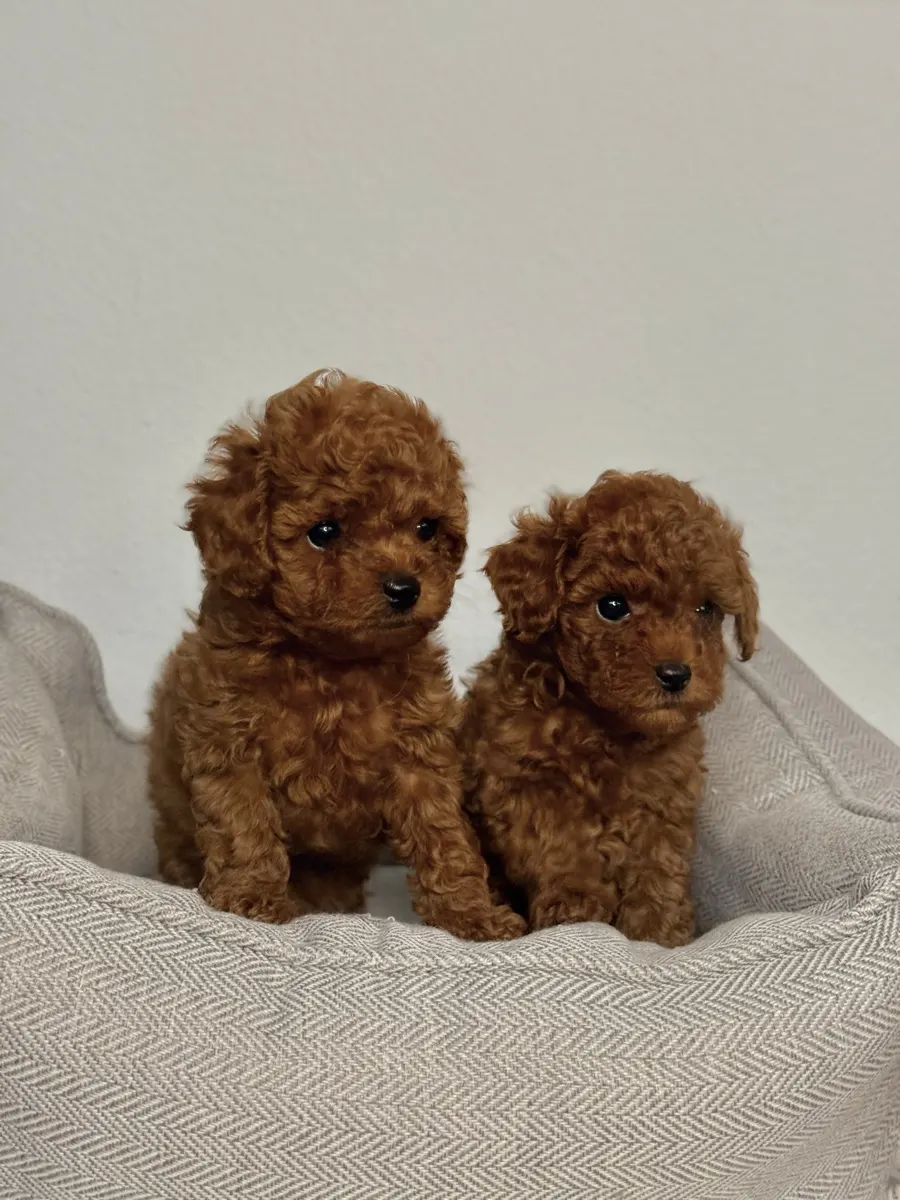
Toy Poodles are a generally healthy, long-lived breed — most live 12–16 years. But like every small dog they carry a handful of conditions worth understanding before you bring one home, and the way a puppy is bred matters enormously. This guide walks through the conditions Toy Poodles are prone to, the extra risks behind "teacup" dogs, and what a responsible breeder does to protect a puppy's health. It's part of our complete Toy Poodle breed guide.
This is general information, not veterinary advice
This article is for education only. For diagnosis, symptoms or treatment of any condition, always consult a qualified veterinarian who can examine your individual dog.
Are Toy Poodles Healthy?
Yes. Toy Poodles are one of the hardier and longer-lived companion breeds — smaller dogs generally outlive larger ones, and the breed is known for staying active well into old age. As a Ukrainian family kennel breeding Toy Poodles in Valencia, Spain, we see the same pattern in our own lines: the dogs that do best come from health-tested parents and are kept lean with good dental care. Health is set mostly by two things — the genetics a puppy starts with, and the care it gets for life.
Common Toy Poodle Health Conditions
None of these are guaranteed, and a well-bred Toy Poodle may never face any of them. But these are the conditions the breed is most prone to, so they're the ones to ask a breeder about:
| Condition | What it is |
|---|---|
| Patellar luxation | Kneecap slips out of its groove; common in small breeds. Parents should be evaluated. |
| Progressive Retinal Atrophy (PRA) | Inherited eye disease causing gradual blindness; a prcd-PRA DNA test screens for the common variant. |
| Dental disease | Crowded little mouths trap plaque; the most common — and most preventable — issue. |
| Tracheal collapse | Weakness of the windpipe causing a honking cough; a harness helps protect it. |
| Hypoglycemia | Low blood sugar in very young or very tiny puppies; managed with frequent feeding. |
| Epilepsy | Seen in some lines; usually well managed with veterinary care. |
| Legg-Calvé-Perthes | A hip-joint condition affecting some toy breeds, often correctable with surgery. |
Joints: patellar luxation & Legg-Calvé-Perthes
The kneecap (patella) slipping out of place is the most common orthopedic issue in toy breeds. Mild cases may only cause an occasional skip in the step; more serious ones need surgery. Legg-Calvé-Perthes affects the hip joint and shows up as limping in young dogs. Both have a genetic component, which is why responsible breeders evaluate the parents.
Eyes: PRA & cataracts
Progressive Retinal Atrophy is an inherited disease that gradually destroys the retina, leading to blindness. A prcd-PRA DNA test lets a breeder avoid producing affected puppies from the common variant, and regular ophthalmologist eye exams catch other eye issues such as cataracts — because the DNA test doesn't cover every form.
Teeth: the most preventable problem
Small jaws crowd the teeth, so plaque and tartar build up quickly and dental disease is genuinely common. Left unmanaged it's linked to heart and kidney problems. The good news: this one is largely in your hands — regular tooth brushing, dental chews and vet cleanings prevent most of it. See our Toy Poodle care guide for a routine.
Airway: tracheal collapse
Some small dogs have a weak windpipe that can partially collapse, causing a distinctive honking cough. Using a harness instead of a collar avoids pressure on the throat and is a simple, effective precaution.
The "Teacup" Health Warning
"Teacup" sounds like a size you can buy, but it's a marketing label, not a breed or an FCI size class. The FCI classifies poodles by height at the withers, and the Toy Poodle standard is 24–28 cm. Dogs marketed as "teacup" or "micro" are bred deliberately below that standard — and pushing for an extreme, tiny size raises the risk of several health problems:
- Hypoglycemia — tiny puppies struggle to keep their blood sugar stable.
- Fragile bones — easily injured by a jump or a fall.
- Dental crowding — even less room for the teeth.
- Liver shunts and heart issues — seen more often in extremely small dogs.
A Toy Poodle bred to the FCI standard is generally the sounder, healthier choice. For the full picture, see our teacup Poodle guide.
Health Testing: The Biggest Protection
Most of the serious conditions above are inherited, which means the most powerful health decision happens before you even meet a puppy — in who its parents are. A responsible Toy Poodle breeder:
- Runs a prcd-PRA DNA test on the breeding dogs.
- Has parents evaluated for patellar luxation.
- Does regular ophthalmologist eye exams.
- Shares the results openly and lets you meet the parents.
A health-tested puppy costs more up front — see our Toy Poodle price guide — but those tested parents are exactly what underpins a long, healthy life.
Keeping Your Toy Poodle Healthy
You can't change your dog's genetics, but daily care makes a real difference:
- Keep them lean — extra weight strains joints, heart and pancreas.
- Brush their teeth — the single most impactful home routine.
- Feed a quality small-breed diet, portioned to maintain an ideal weight.
- Stay on top of vet care — vaccinations, parasite control and regular check-ups.
- Use a harness and avoid big jumps from heights.
For more on day-to-day routines and how care affects longevity, see our care guide and Toy Poodle lifespan guide.
Looking for a Healthy Toy Poodle?
Valivans breeds red and apricot Toy Poodles in Valencia, Spain — Ukrainian UKU-registered (FCI-recognised), from health-tested parents, raised in a family home. We deliver across Europe and internationally.
Frequently Asked Questions
Yes — Toy Poodles are generally a hardy, long-lived breed, typically living 12–16 years. Like all small dogs they have a few conditions worth knowing about, such as patellar luxation, PRA and dental disease, but most are reduced by buying from a breeder who health-tests both parents.
The main ones are patellar luxation (slipping kneecap), Progressive Retinal Atrophy (PRA), dental disease, tracheal collapse and, in very young or very tiny puppies, hypoglycemia. Some lines can also carry epilepsy or Legg-Calvé-Perthes disease. Most have a genetic component, so health-tested parents matter.
Often, yes. "Teacup" is a marketing label, not a breed or FCI size class. Breeding for an extreme, below-standard size raises the risk of hypoglycemia, fragile bones, dental crowding, liver shunts and heart issues. A Toy Poodle bred to the FCI standard (24–28 cm) is generally the sounder choice.
Responsible Toy Poodle breeders test the parents for the conditions the breed is prone to: a prcd-PRA DNA test, patellar luxation evaluation, and regular ophthalmologist eye exams. They should share the results openly. Health-tested parents are the single biggest protection for your puppy's health.
Keep them lean, brush their teeth, feed a quality small-breed diet, keep up routine vet checks and vaccinations, use a harness instead of a collar, and give gentle daily exercise. Starting with a puppy from health-tested parents gives the best foundation. For specific concerns, always consult your veterinarian.