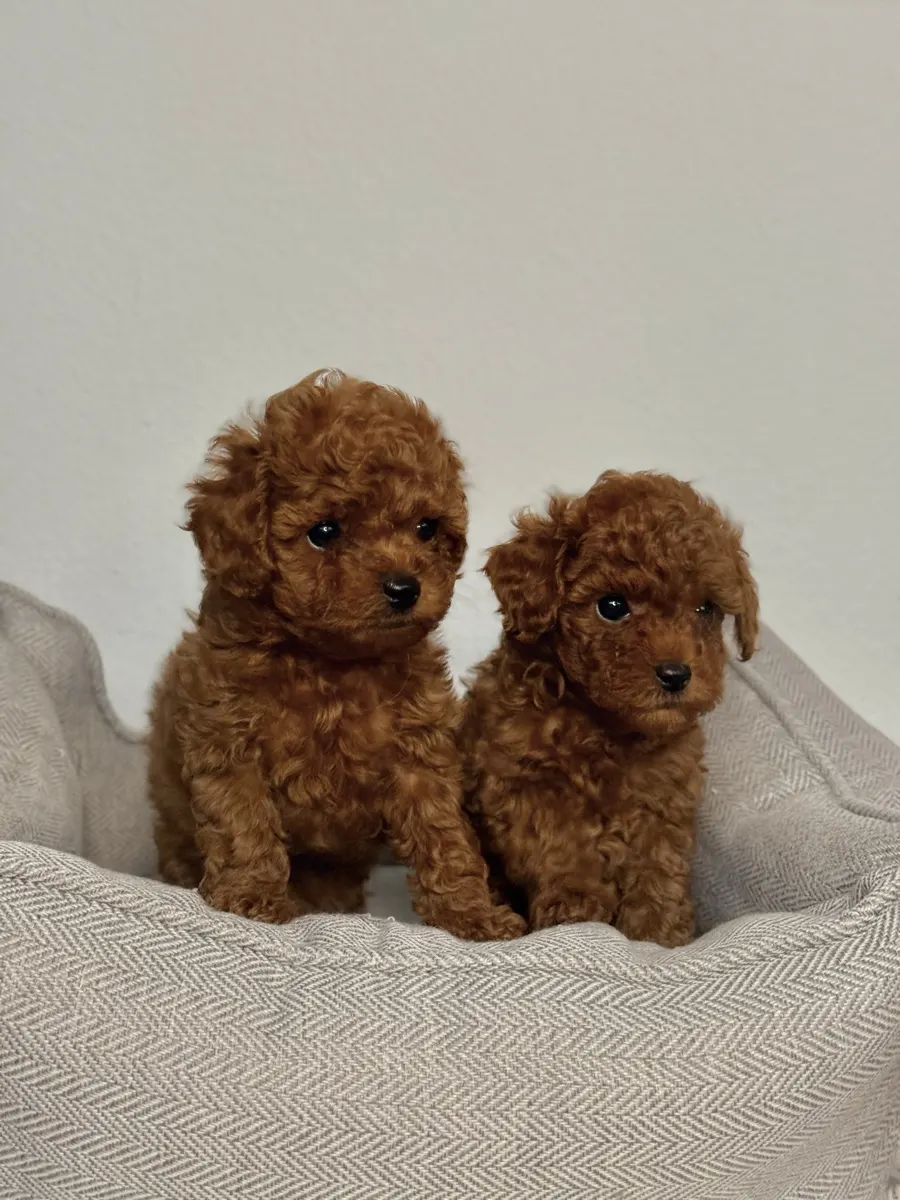
Yes — Toy Poodles are widely considered hypoallergenic. Their low-shedding, single curly coat traps loose hair and dander instead of scattering it around the home, so they tend to trigger fewer allergic reactions than most breeds. The important caveat: no dog is 100% allergen-free, and regular grooming is what keeps a Poodle allergy-friendly. This guide explains why, and how to manage allergens day to day. It's part of our complete Toy Poodle breed guide.
The short answer
Toy Poodles have a low-shedding single curly coat that holds dander rather than releasing it, so they're among the most allergy-friendly breeds. No dog is fully hypoallergenic — allergens come mainly from dander, saliva and urine, not hair — but regular grooming every 4–6 weeks keeps reactions low.
Why Toy Poodles are easier on allergies
Most people who react to dogs are actually allergic to a protein found in dander, saliva and urine — not the hair itself. Hair matters because it carries dander around the home. The Poodle's coat helps on both counts:
- Single coat, no heavy shed: unlike double-coated breeds, Poodles don't "blow" their coat, so far less hair (and attached dander) ends up on floors and furniture.
- Curls trap loose hair: shed hair stays in the curls until you brush it out, rather than floating into the air.
- Small size, less coat: a Toy Poodle simply has less coat overall than a larger dog, so there's less to manage.
Tips for allergy sufferers
A Poodle's coat does the hard part, but routine matters. To keep allergens low:
- Brush every 2–3 days and groom every 4–6 weeks to remove trapped hair and dander — see the care & grooming guide.
- Bathe roughly monthly with a gentle dog shampoo to wash dander off the coat.
- Wash bedding often and use a HEPA air filter in the rooms you share.
- Keep the dog out of the bedroom and wash your hands after cuddles.
- Meet the individual dog first. Sensitivity varies person to person, so spending time with a specific Poodle is the best test of your own reaction.
Considering a hypoallergenic Toy Poodle?
Valivans breeds red and apricot Toy Poodles in Valencia, Spain — low-shedding, health-tested and raised in a family home. If allergies are a concern, get in touch and we'll help you meet our dogs.
Frequently Asked Questions
Yes, Toy Poodles are widely considered hypoallergenic. Their low-shedding, single curly coat traps loose hair and dander instead of dropping it around the home, so they tend to trigger fewer reactions. No dog is 100% allergen-free, but Poodles are one of the better choices for allergy sufferers.
Very little. A Toy Poodle has a single curly coat with no heavy seasonal shed; loose hair stays in the curls until brushed out. That is why they are low-shedding, but it also means the coat needs brushing every 2–3 days and grooming every 4–6 weeks.
Most dog allergies are caused by a protein in dander, saliva and urine, not the hair itself. Hair matters mainly because it carries dander around the home. A low-shedding coat like the Toy Poodle's releases less dander into the air, which is why these dogs are easier on allergies.
Brush and groom regularly to remove trapped hair and dander, bathe the dog roughly monthly, wash bedding often, use a HEPA air filter, keep the dog out of the bedroom, and wash your hands after cuddles. Meeting the specific dog first is the best way to gauge your own reaction.
For many allergy sufferers, yes. The low-shedding coat and reduced dander make Toy Poodles one of the more allergy-friendly breeds, and their small size means less coat overall. Anyone with allergies should still spend time with the individual dog before committing, as sensitivity varies from person to person.