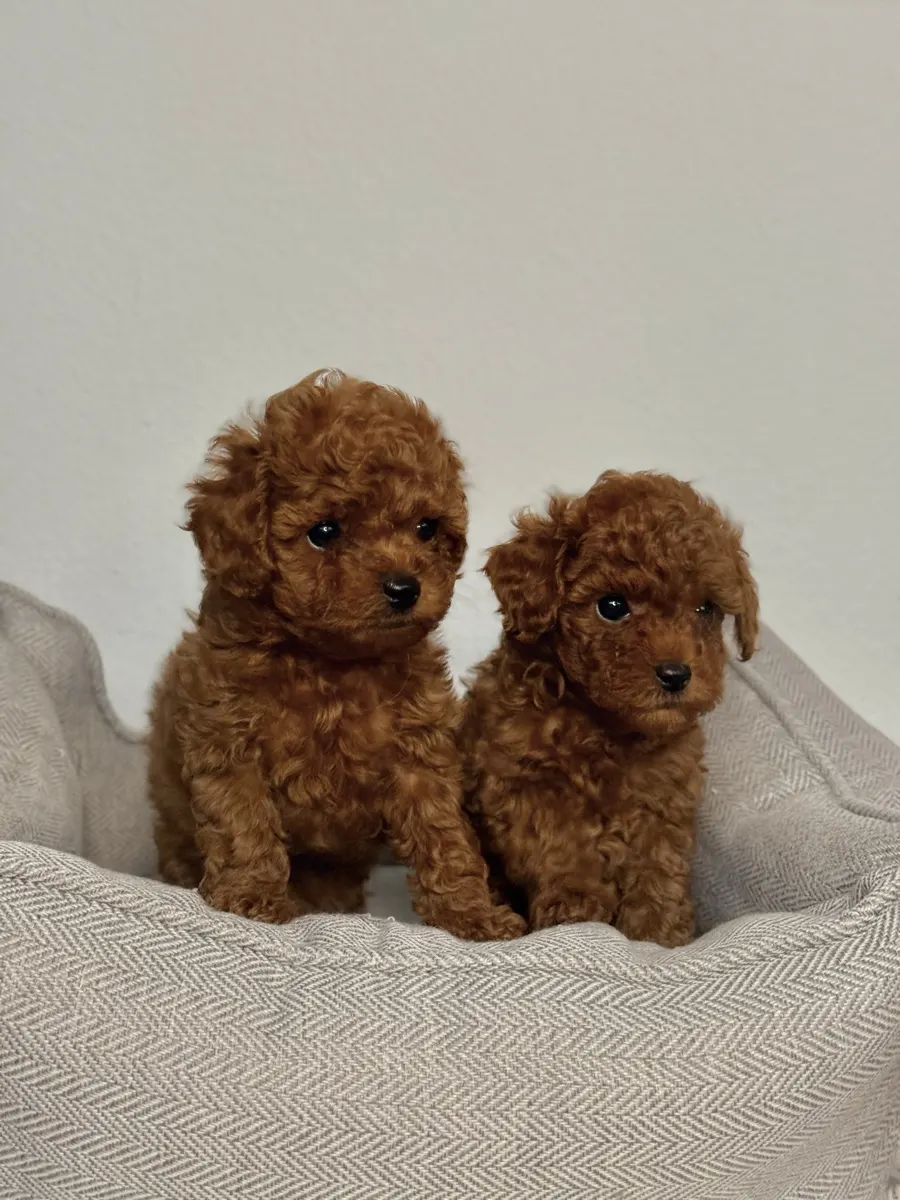
Behind the elegant curly coat is one of the brightest, most affectionate small dogs you can live with. Toy Poodles are clever, eager to please and deeply bonded to their people — a combination that makes them wonderful companions but also dogs that genuinely need to be with you. Here's what their personality is really like, quirks included. This is part of our complete Toy Poodle breed guide.
In a nutshell
Intelligent, affectionate, playful and people-oriented. Toy Poodles are among the smartest breeds, bond closely with their family, and are gentle and trainable. The flip side: they're sensitive, can be a little vocal, and don't like being left alone for long.
Highly Intelligent
Poodles are consistently ranked among the most intelligent dog breeds, and the Toy is no exception. They learn commands and routines fast, love a challenge, and pick up tricks almost too easily. That brainpower is a gift for training — but it also means a Toy Poodle needs mental stimulation; a bored one will invent its own (sometimes mischievous) fun. For how to channel it, see our training guide.
Affectionate & People-Oriented
Toy Poodles are real "velcro" dogs — they want to be where you are, often following you from room to room. They form strong bonds, love a lap, and thrive on attention and involvement in family life. If you want an aloof, independent dog, this isn't the breed; if you want a devoted shadow, it's perfect.
Gentle & Good With Families
Well-socialised Toy Poodles are gentle, adaptable and friendly, getting along with children and other pets alike. Because they're small, play with very young children should be supervised so the dog isn't accidentally hurt — but as family companions they're affectionate and easygoing. See our apartment & family guide for living with one day to day.
Sensitive & Alert
This is a sensitive breed that reads your mood and responds best to calm, positive, reward-based handling — harsh corrections backfire. They're also naturally alert and will happily announce a visitor, which makes them little watchdogs. With early training and enough stimulation, that alert barking stays manageable rather than excessive.
They Need Company
The one big thing to know: Toy Poodles are companion dogs that don't like being alone. Left by themselves too long or too often, they can develop separation anxiety. They suit homes where someone is around for much of the day, or where the dog is gradually taught to handle shorter absences calmly.
Want a Bright, Loving Companion?
Valivans breeds red and apricot Toy Poodles in Valencia, Spain — Ukrainian UKU-registered (FCI-recognised), from health-tested parents, raised in a family home so they're well-socialised from day one. We deliver across Europe and internationally.
Frequently Asked Questions
Toy Poodles are bright, affectionate and people-oriented. They bond closely with their family, love to be involved in everything, and are eager to please — which makes them highly trainable. They're playful and gentle, and generally get on well with children and other pets when properly socialised.
Yes — Poodles are widely regarded as one of the most intelligent dog breeds. Toy Poodles learn quickly, pick up tricks and routines with ease, and need mental stimulation to stay content. That intelligence is a joy to train but means a bored Poodle will find its own entertainment.
They make excellent family companions. Toy Poodles are affectionate, adaptable and gentle, and they bond with the whole household. Because they're small, interactions with very young children should be supervised so the dog isn't accidentally hurt, but well-socialised Toy Poodles are loving family pets.
They can be alert and a little vocal — they'll often announce visitors. It's manageable: with early training, mental stimulation and not being left alone too long, excessive barking is easily kept in check. A bored or anxious Toy Poodle is the one most likely to bark.
Only for moderate periods. Toy Poodles are companion dogs that thrive on company and can develop separation anxiety if left alone too long or too often. They suit households where someone is around much of the day, or where they're gradually trained to cope with shorter absences.