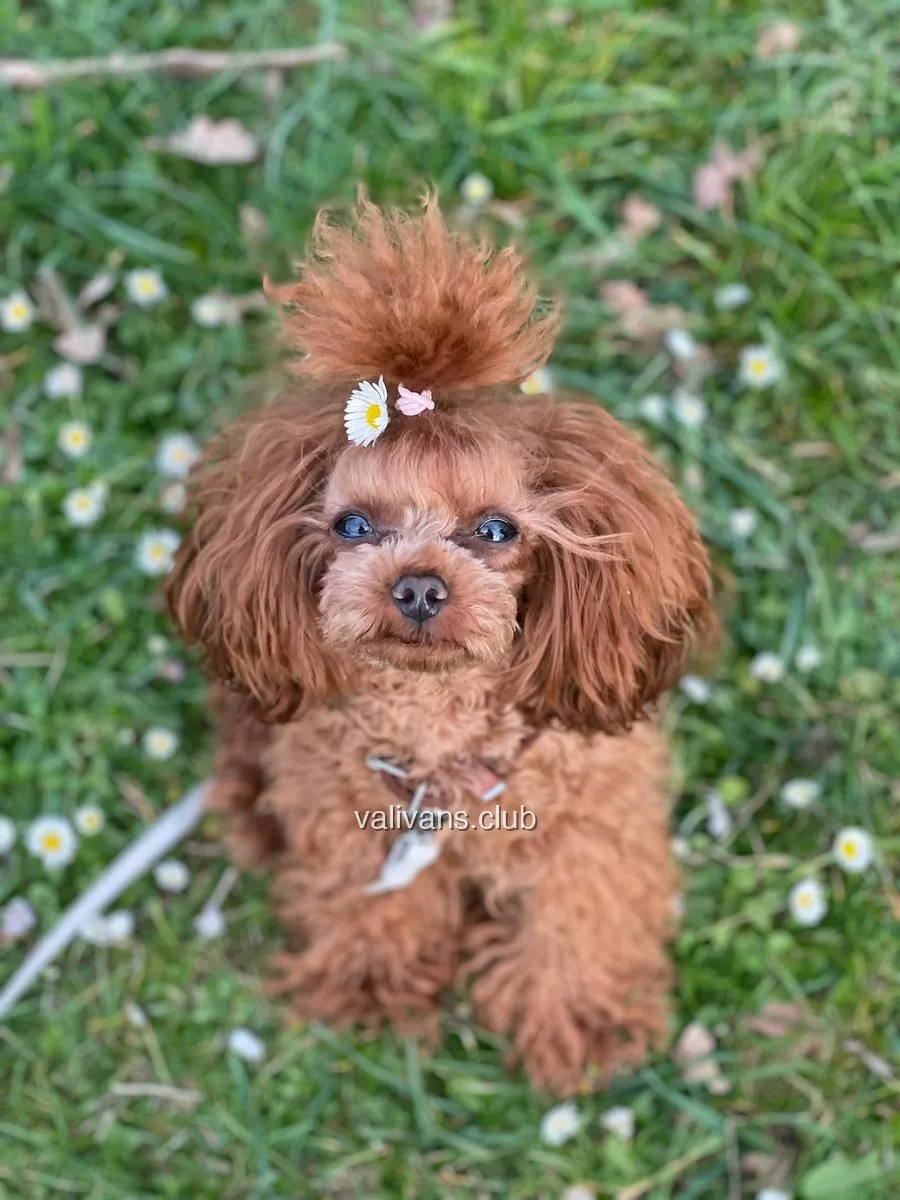
Toy and Miniature Poodles are the same breed in two different sizes. They share the same curly low-shedding coat, the same famous intelligence and the same affectionate temperament — the real question when you're choosing is how much dog you want in the room. This guide compares them side by side so you can pick the right size for your home.
As a Ukrainian family kennel in Valencia, Spain, Valivans focuses on red Toy Poodles, so we'll be clear about where each size shines.
The Short Answer
The only built-in difference is size. The FCI Poodle standard (No. 172) sets height at the withers only; the kg figures below are breeder estimates, not standard figures:
- Toy Poodle — 24–28 cm (9.5–11 in) at the withers, about 2.5–4 kg (5–9 lbs) by breeder estimate. The smallest recognized variety.
- Miniature Poodle — 28–35 cm (11–14 in), about 5–7 kg (11–15 lbs) by breeder estimate. One step up: a sturdier, more robust little dog.
Everything else — coat, brains, trainability, grooming needs, personality — is essentially shared. A Miniature is roughly a Toy scaled up: still a small dog, but more solid and a touch more energetic.
Key Fact
Toy and Miniature are varieties of one breed, judged against the same standard apart from height. There's also a Standard Poodle (45–60 cm) and the "teacup" label, which is not an FCI size — see our teacup poodle guide for what the label means.
Toy vs Miniature Poodle at a Glance
| Trait | Toy Poodle | Miniature Poodle |
|---|---|---|
| Height (FCI) | 24–28 cm | 28–35 cm |
| Weight (breeder estimate) | ~2.5–4 kg | ~5–7 kg |
| Build | Tiny, delicate lap dog | Sturdier, more robust |
| Energy | Moderate | Moderate–high |
| With young kids | Best with gentle handling | More tolerant of rough play |
| Coat & shedding | Same single, curly, low-shedding coat | |
| Intelligence | Identical — among the smartest of all breeds | |
| Lifespan | ~12–16 years | ~12–15 years |
Size & Build
This is where the choice really lives. A Toy Poodle is a true lap dog — light enough to carry everywhere, ideal for small flats and gentle households, but more delicate around boisterous toddlers or large dogs. A Miniature Poodle is still small and apartment-friendly, but solid enough to hold up to family life and active children. For where the Toy sits exactly, see our full-grown Toy Poodle size & growth guide; if you simply want the smallest poodle there is, how small a Toy Poodle really gets walks the whole size ladder.
Temperament & Intelligence
Here the two are nearly identical. Poodles rank #2 of all breeds for working intelligence (just behind the Border Collie), and that brainpower is the same whether the dog is a Toy or a Miniature. Both are:
- Highly trainable — quick to learn commands, tricks and routines
- Affectionate and people-oriented — they bond closely and dislike being left alone
- Alert but not yappy when well socialized
- Playful well into adulthood and eager to work with you
The slight difference: a Miniature's extra size and energy often makes it a little keener for active games and longer walks, while a Toy is happy with shorter sessions and more lap time. At Valivans, puppies are raised in a family home with three children and other dogs, so they arrive confident and well-socialized whichever size you choose.
Energy & Exercise
Neither is a couch potato — both are bright dogs that need daily activity to stay happy. A Toy is content with ~30 minutes of walks and play a day plus some training games; a Miniature appreciates a bit more, around 45–60 minutes, and enjoys more vigorous play. Mental exercise (puzzle toys, trick training) matters as much as physical for both.
Grooming & Coat
Grooming is the same for both — they share one curly, low-shedding, low-dander coat that grows continuously:
- Brushing: every 2–3 days to prevent matting
- Professional groom: every 4–6 weeks
- Bathing: every 2–3 weeks
- Ears & nails: check ears weekly, trim nails every 2–3 weeks
That coat makes both varieties a strong choice for allergy-sensitive homes — no dog is 100% hypoallergenic, but poodles come about as close as it gets. They also come in the same wide palette; see our Toy Poodle colors guide.
Health & Lifespan
Both are long-lived, generally 12–16 years, and smaller dogs tend to edge out the longest lifespans — so both outlive Standard Poodles on average. They share most of the same common conditions (patellar luxation, PRA and other eye disease, dental issues); the tiniest Toys can be a little more prone to fragility-related issues like dental crowding and patellar luxation. In both, lifespan depends far more on health-tested parents, a lean weight and good dental care than on the size difference. Our Toy Poodle lifespan & health guide goes deeper.
Price
Pricing is similar for both varieties and is driven by pedigree, health testing and color rather than by size alone — though the very smallest Toys often command the most. In Europe, expect roughly €2,500–€5,000 from a reputable breeder with FCI pedigree and full health documentation. Prices far below that range are a warning sign about breeding practices. (Pricing is a general market guide — confirm current prices with the breeder.) For a full breakdown, see our Toy Poodle price guide.
Which Should You Choose?
There's no "better" variety — only the better fit for your life:
- Choose a Toy Poodle if you want the smallest possible companion, live in a compact space, travel often, or want a true lap dog and your household is calm or has older, gentle children.
- Choose a Miniature Poodle if you want a small dog that's a bit sturdier for active family life and young children, or you'd like slightly more energy and stamina for walks and games.
Whichever you pick, the things that matter most are identical: health-tested parents, an FCI/UKU pedigree, and a breeder who raises puppies in a home.
Looking for a Toy Poodle?
Valivans, a Ukrainian family kennel, breeds red Toy Poodles in Valencia, Spain. UKU-registered (FCI-recognised), from health-tested parents, raised at home. We deliver across Europe and internationally.
Frequently Asked Questions
The main difference is size. The FCI standard separates the varieties by height at the withers, not by weight: a Toy Poodle stands 24–28 cm and a Miniature 28–35 cm. In practice a Toy weighs about 2.5–4 kg and a Miniature about 5–7 kg — breeder estimates, not figures from the standard. They share the same coat, intelligence and temperament — the Miniature is simply a sturdier, more robust dog.
Both adapt well because both are clean, low-shedding and people-focused. The Toy needs less space and a little less exercise, while the Miniature is more robust around young children and slightly more energetic. Either is a good apartment dog with daily walks and mental stimulation.
Yes — both are highly intelligent, trainable, affectionate and playful, and both bond closely with their family. The Miniature can be a touch more energetic and sturdy for rough-and-tumble play, while the Toy is a smaller lap-sized companion, but their core personality is the same.
Both are long-lived, typically 12–16 years, and smaller dogs often edge out slightly longer lifespans. Lifespan depends far more on health-tested parents, a lean weight and good dental care than on the small size difference between the two.
For homes with young, active children a Miniature is often the safer choice because it is sturdier and less fragile than a tiny Toy. Toys are wonderful with gentle, older children. Either way, supervision and teaching kids to handle the dog carefully matters most. Contact us at [email protected] or DM @valivans.club on Instagram.