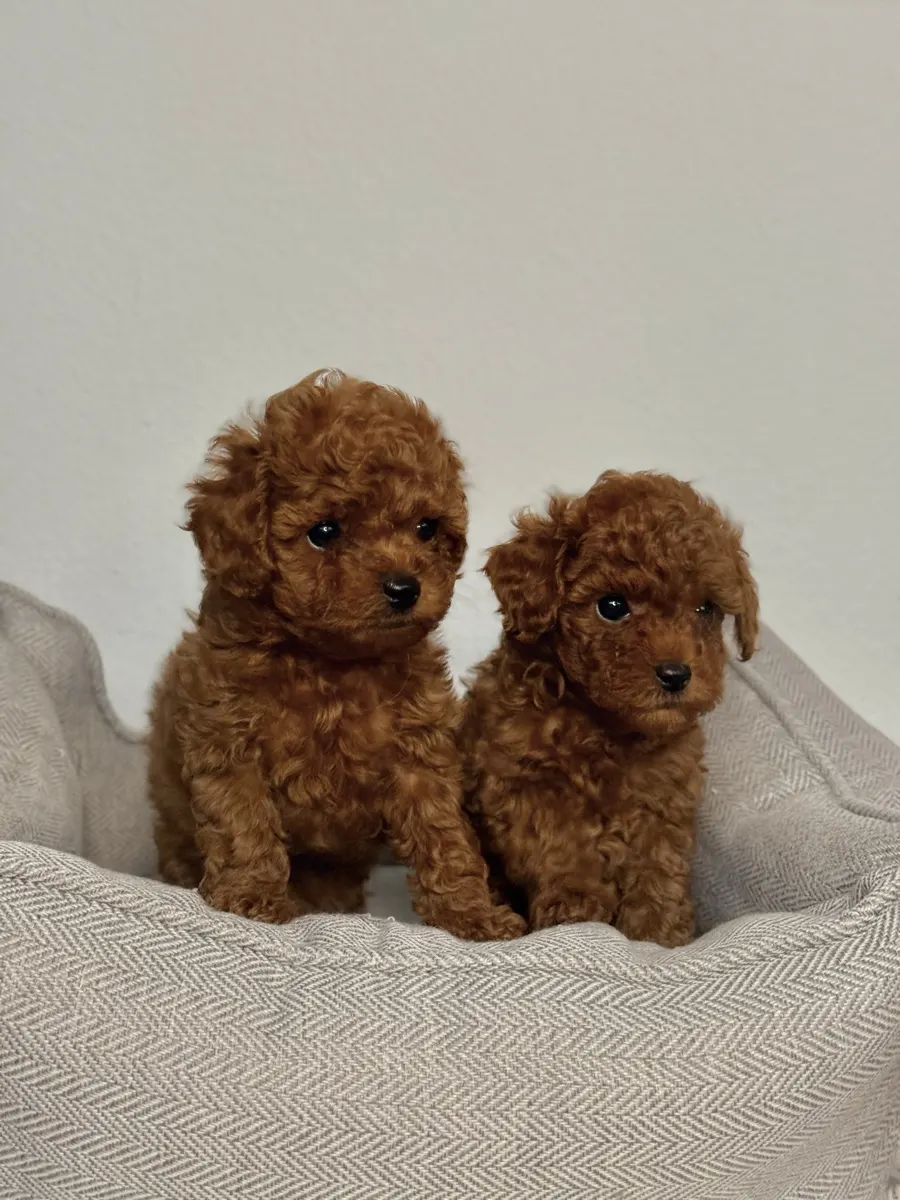
Bringing home a Toy Poodle puppy is exciting — and the first few weeks set the foundation for the years ahead. A little preparation makes the transition smooth for both of you. This guide walks through what to buy, how to feed, the vet basics, settling in, and what a responsible breeder should send home with your puppy. It's part of our complete Toy Poodle breed guide.
General information, not veterinary advice
The feeding and vaccination notes below are general guidance. Your breeder and veterinarian know your individual puppy — always follow their specific schedule for food, vaccinations and health care.
Supplies Checklist
Have these ready before the puppy arrives:
- A soft bed and a crate or playpen for a safe den and house-training.
- Food and water bowls (shallow, sized for a small muzzle).
- Complete puppy food — ideally the same one the breeder uses, to avoid tummy upsets. See our food & diet guide.
- A harness and lead — a harness is kinder than a collar on a small windpipe.
- Safe chew and puzzle toys to keep a clever puppy busy.
- Grooming basics — a slicker brush and comb to start a coat routine early.
- Puppy pads for the early house-training weeks.
Feeding & the Hypoglycemia Caution
Young Toy Poodle puppies are tiny, and very small puppies can be prone to hypoglycemia (low blood sugar). The protection is simple: small, frequent meals — usually three to four times a day — so they never go long without food. Keep to the food and schedule your breeder started, introduce any changes gradually, and ask your vet if you're unsure. Our health guide covers the conditions the breed can be prone to.
Vet & Vaccinations
Book a check-up soon after your puppy comes home so your vet can confirm everything's on track. Puppies begin their core vaccinations as young puppies and complete the initial course a few weeks later; your vet will then tell you when it's safe to walk in public areas. Exact timing varies by country and vaccine, so follow your own vet's schedule for vaccinations, worming and flea control.
Settling In & House-Training
Keep the first days calm and predictable. Set up a quiet space, establish a routine for meals, toilet trips and naps, and let the puppy explore on its own terms. For house-training, take the puppy out (or to the pad) after every meal, nap and play session, and reward success warmly — this sensitive, clever breed learns fast with gentle, positive handling.
Early Socialization
The first few months are a critical socialization window. Gently introduce your puppy to new people, sounds, surfaces and gentle handling (paws, ears, mouth) so it grows up confident and easy to groom. Keep experiences positive and not overwhelming. For ongoing methods, see our training guide.
What a Responsible Breeder Sends Home
When you collect your puppy, a responsible breeder should provide:
- Pedigree — a UKU/FCI registration documenting the lineage.
- Veterinary passport — a record of health checks and treatments.
- Microchip — for permanent identification.
- Vaccinations — age-appropriate and recorded.
- Health certificate — confirming the puppy is fit and well.
They should also share the parents' health-test results and stay available for questions long after you take the puppy home. For how to choose a trustworthy source, see our Toy Poodle for sale buyer's guide, and settle into a routine with our care guide.
Ready for a Toy Poodle Puppy?
Valivans breeds red and apricot Toy Poodles in Valencia, Spain — Ukrainian UKU-registered (FCI-recognised), from health-tested parents, raised in a family home and sent home fully documented. We deliver across Europe and internationally.
Frequently Asked Questions
The essentials are a soft bed, food and water bowls, a complete puppy food, a harness (kinder than a collar on a small windpipe) and lead, a crate or playpen, safe chew and puzzle toys, and basic grooming tools like a slicker brush and comb. Puppy pads help with house-training in the early weeks.
Young Toy Poodle puppies need small, frequent meals — usually three to four times a day — to keep their blood sugar stable, because tiny puppies are prone to hypoglycemia. Follow the schedule your breeder and vet recommend, and never leave a very young puppy without food for long stretches.
A responsible breeder sends the puppy home with its pedigree (such as a UKU/FCI registration), a veterinary passport, a microchip, age-appropriate vaccinations, and a health certificate. They'll also share the parents' health-test results and offer ongoing support after you take the puppy home.
Keep the first days calm and predictable. Set up a quiet space with a bed and water, establish a routine for meals, toilet trips and naps, and let the puppy explore on its own terms. Gentle, positive handling builds trust quickly with this sensitive breed.
Puppies start their core vaccinations as a young puppy and finish the initial course a few weeks later, after which your vet will confirm when it's safe to walk in public areas. Exact timing varies by country and vaccine, so follow the schedule set by your own veterinarian.