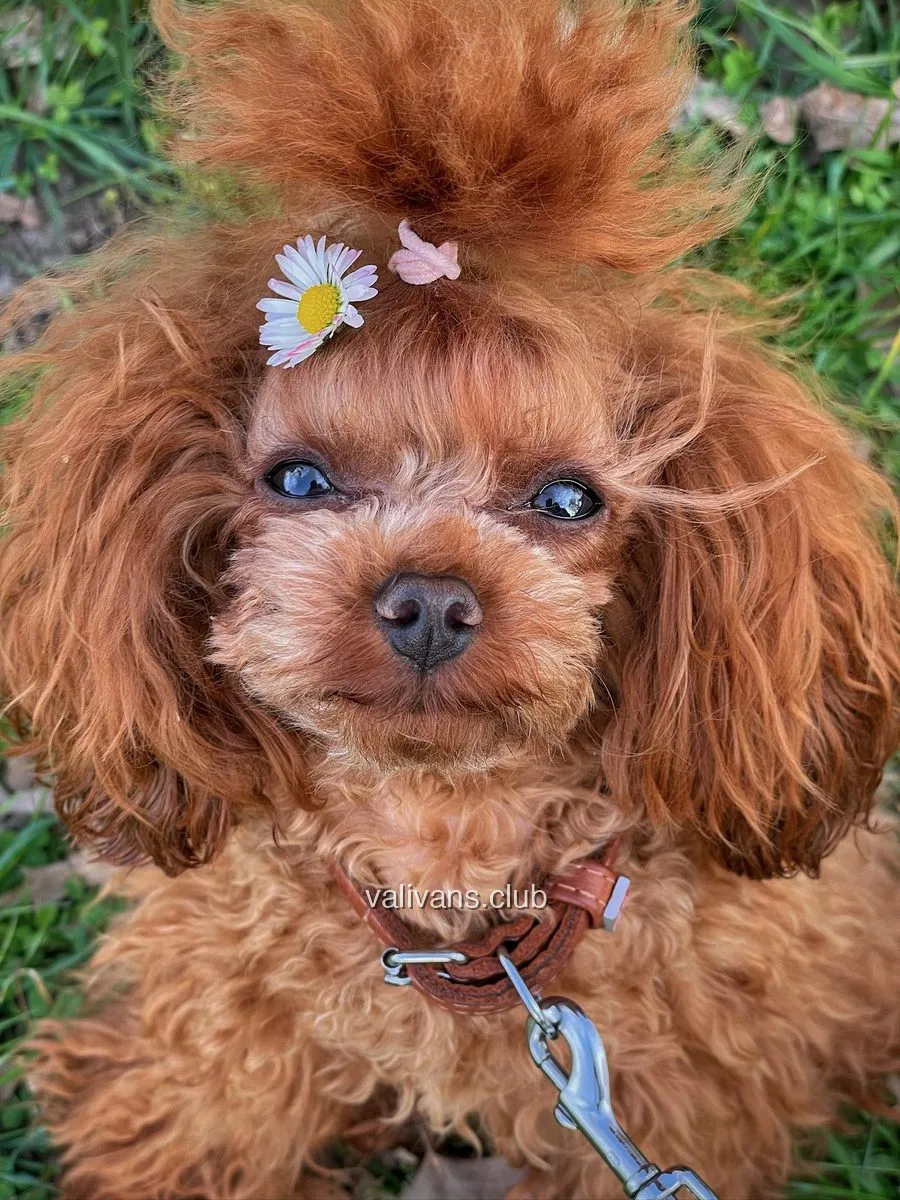
Many small dogs have reddish or brown streaks running from the inner corner of the eye down the muzzle, and the Toy Poodle is no exception. On a red coat they are barely visible; on white, cream and apricot coats they stand out, and those are the dogs whose owners ask about them most. On their own, tear stains are usually a matter of care and appearance. A few signs, described below, are a reason to take the dog to a vet. This page goes with our grooming guide, the care guide and the white Toy Poodle article.
Looking for a Toy Poodle?
Write to us at [email protected] or message us on Instagram @valivans.club.
What tear stains are
A dog's tears contain porphyrins, iron-containing molecules that the body makes when it breaks down red blood cells and that leave the body in tears, saliva and urine, among other routes. When tears keep landing on the fur and drying there, the porphyrins dye the hair a reddish-brown. Some dogs have more porphyrin in their tears than others, and on light fur the color shows much more. Stains are more noticeable on a white or cream Toy Poodle and often go unnoticed on a red one. Veterinary sources say most dogs with tear stains have no underlying eye problem; in many, the shape of the eyelids and face lets tears spill onto the fur. It is a different matter when the eye waters because of irritation or disease, and telling one from the other is what matters most.
Why a Toy Poodle's eyes water
In a healthy eye, tears drain through two tiny openings near the inner corner of the eyelids into the nasolacrimal duct and from there into the nose. Stains appear when there are too many tears or when the tears do not reach the duct. In a Toy Poodle several causes usually add up.
- Eyelid and eye socket shape. With a shallow eye socket and a certain eyelid shape, tears do not reach the openings of the duct and spill over. This is a feature of the dog's build, and vets usually treat these stains as cosmetic.
- Hair near the eyes. Hairs in the inner corner of the eye act like a wick: they draw tears onto the face and hold the moisture. A poodle's coat grows continuously, so stains show more between haircuts.
- A blocked nasolacrimal duct. Inflammation, infection, debris or scar tissue from an old injury can block the duct. Poodles are among the breeds in which blockage is more common.
- Irritation and eye disease. Allergies, dust, smoke, conjunctivitis, misdirected eyelashes, an eyelid that rolls inward, a scratched cornea, glaucoma: with all of these the eye waters more. Those tears usually come with other signs. A vet should look at those.
- Wet fur. Fur that stays damp under the eye irritates the skin, can smell, and opens the door to a secondary skin infection. That is why drying the area matters as much as wiping it.
Normal or a problem
A calm picture looks like this: the eyes are clear, the dog does not squint or rub its face, and under the eyes there is only damp or stained fur, with no smell and no reddened skin. Those stains are kept under control with care, and a vet can confirm at a routine checkup that the eyes are fine. Squinting, pawing at the eye, colored discharge or a red or swollen eye means a same-day visit; new stains on a dog that never had them mean an appointment within days. The full lists of signs are at the end of this page. Even with no signs, it is worth showing the eyes to a vet once: the vet rules out causes that care cannot fix, and after that you can keep up home care with confidence.
Daily care
Keep the hair near the eyes short
Ask the groomer to trim the hair in the inner corner of the eye and under the eyes short, and to repeat it at every haircut. Home trimming near the eye is risky; if you do it, use round-tipped scissors on a calm, still dog, and leave it to the groomer if there is any doubt. The shorter the hair near the eye, the less tear it draws onto the face.
Wipe and dry
Once or twice a day, wipe the skin and fur under the eye with a clean cotton pad or a soft cloth dampened with warm water. Always move away from the eye, outward. Use a fresh pad for each eye. Afterward, pat the area dry with a clean, dry towel or tissue: damp fur stains more and irritates the skin more.
A clean face overall
After meals and drinking, blot the beard and muzzle. Regular baths with dog shampoo and a tidy face trim help keep the area clean; the haircut and bath schedule is in the grooming guide.
Eye wipes and lotions
Wipes or lotions made for the eye area of dogs are fine if they are made for that zone and you apply them only to the fur and skin under the eye; the product must not get into the eye. Before any new product, ask your vet, since some products sold for tear stains can harm the eye.
Patience
Stained fur does not wash out; it grows out and is trimmed off. After a haircut, check whether the new fur stays clean and judge your routine over several weeks.
What not to do
- Hydrogen peroxide. Anything containing hydrogen peroxide is off limits near the eyes: if it gets into the eye, it can cause severe damage. Online tips about lightening stains with peroxide do not make it safe.
- Bleach and household chemicals. Bleach, coat whitening pastes, alcohol, household cleaners and anything not made for the eye area do not belong there. Harsh chemicals irritate the eye on their own.
- Human eye drops and old medication. Eye drops from the family medicine cabinet and leftovers of a medicine that once helped the dog are used only when a vet prescribes them: a remedy for a past problem may not help, or may harm, now.
- Supplements and chews “for tear stains.” No over-the-counter tear stain remedy has been proven fully effective, and some may harm the eye. Veterinary sources no longer recommend low-dose antibiotics against tear stains because of the risk of bacterial resistance. Discuss any supplement with your vet before buying it.
- Rubbing and picking. Dry cotton, stiff brushes and combing out dried crusts scratch the skin. Soften crusts with warm water first.
Toy Poodle puppies
A puppy's facial hair is often already in the eyes by the first haircut. So before stains even show, get the puppy used to having its face wiped: a few seconds, a calm voice, a treat afterward. A puppy that calmly lets you touch its face and eyes from an early age usually handles grooming and vet exams better. If a puppy's eyes suddenly water more than usual, the same rules apply as for an adult dog, and the puppy will see the vet for vaccinations anyway, which is a good moment to have the eyes looked at.
When to see a vet
See a vet the same day if:
- the dog squints, keeps the eye half closed or rubs it with a paw;
- the discharge has turned yellow, green or cloudy;
- the eye or the eyelids are red or swollen;
- one eye has suddenly started watering heavily and the dog is clearly uncomfortable.
Book a vet appointment in the next few days if:
- stains have appeared on a dog that never had them;
- the skin under the eye is red, moist or smells bad;
- with regular care the stains stay heavy and the fur under the eyes has been wet for weeks.
If only one eye stains but the dog is comfortable, mention it at your next vet visit. We are breeders and do not make diagnoses. If something about your dog's eyes worries you, it is best to have a vet look.
Planning for a Toy Poodle puppy?
Valivans, a Ukrainian family kennel, breeds red Toy Poodles in Valencia, Spain: UKU pedigrees (FCI-recognized), health-tested parents, puppies raised underfoot in our home. Write to us by email or on Instagram.
Frequently asked questions
A dog's tears contain porphyrins, iron-containing molecules that dye the fur reddish-brown as they dry on it. Stains appear when tears land on the fur regularly: because of the shape of the eyelids and eye socket, because of hairs near the eye that draw tears onto the face, because of a blocked nasolacrimal duct, or because of eye irritation. The color shows more on light fur and often goes unnoticed on red.
No. Hydrogen peroxide is not used near the eyes: if it gets into the eye, it can cause severe damage. For daily care, a clean cotton pad with warm water and a dry tissue are enough, and wipes made for the eye area of dogs are best chosen together with your vet.
No over-the-counter tear stain remedy has been proven fully effective, and some may harm the eye. Veterinary sources no longer recommend low-dose antibiotics against tear stains because of the risk of bacterial resistance. Discuss any supplement with your vet before buying it.
Once or twice a day, wipe the skin and fur under the eye with a clean cotton pad or a soft cloth dampened with warm water, moving away from the eye, and then pat the area dry. Keep the hair in the inner corner of the eye and under the eyes trimmed short; the groomer does this at every haircut.
See a vet the same day if the dog squints, keeps the eye half closed or rubs it with a paw, if the discharge has turned yellow, green or cloudy, if the eye or the eyelids are red or swollen, or if one eye has suddenly started watering heavily and the dog is clearly uncomfortable. Book a vet appointment in the next few days if stains have appeared on a dog that never had them, if the skin under the eye is red, moist or smells bad, or if with regular care the stains stay heavy and the fur under the eyes has been wet for weeks.