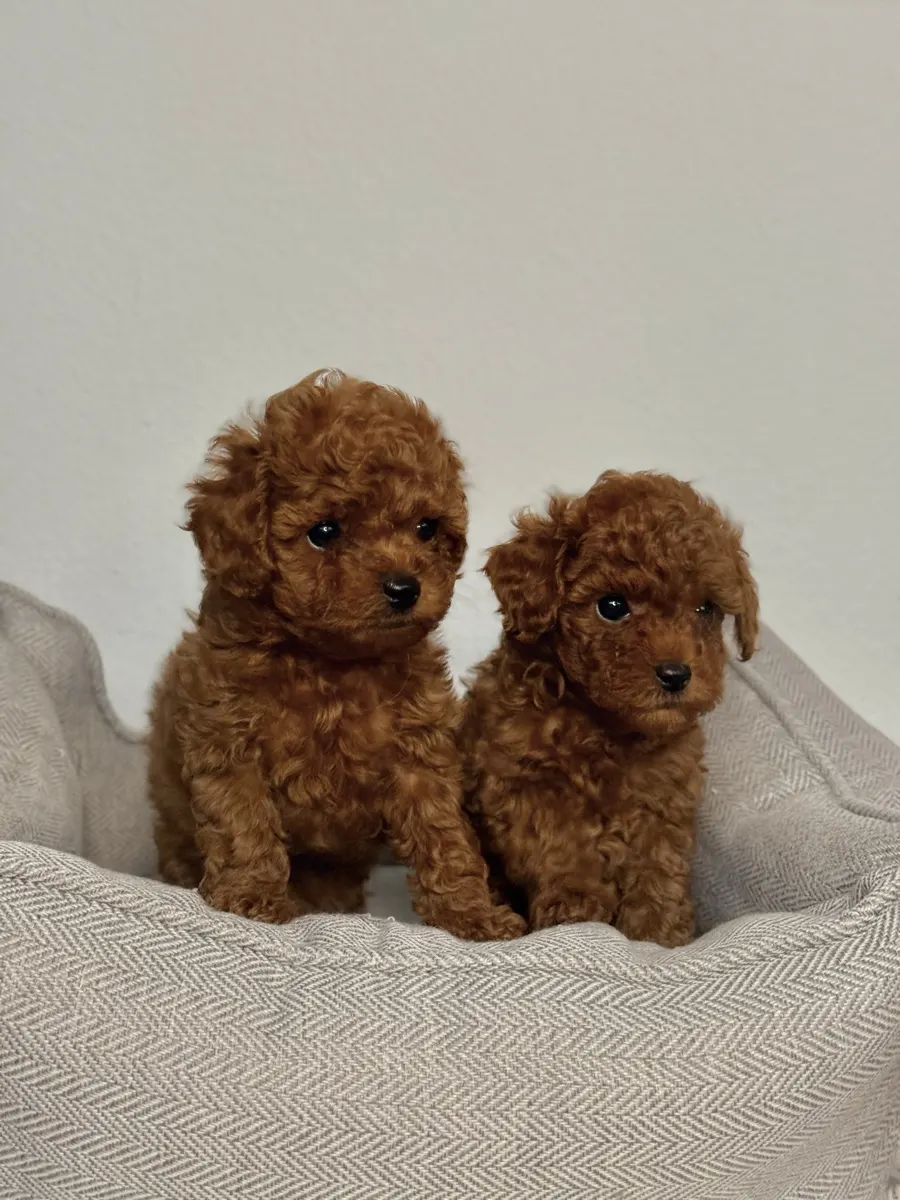
The white Toy Poodle is one of the breed's classic, elegant looks: a bright, pure white coat on a small, very clever dog with a sweet nature. Not every white is the same, though. What separates a quality white from an average one is, above all, pigment.
At Valivans, a Ukrainian family kennel in Valencia, we specialize in red and apricot, but white is one of the breed's standard colors. This guide covers what makes a white look good, whether the coat stays white with age, how to care for the coat and tear stains, what a white puppy costs and how to find a healthy one.
What makes a good white Toy Poodle? Pigment
In a quality white, the coat is only half the picture. The other half is skin pigment. A good white Toy Poodle has:
- A black nose, lips and eye rims: dark pigment against a white coat is the mark of a well-bred dog.
- Dark, alert eyes.
- Dark pads and, ideally, dark nails.
- A clean, even white with no large yellowish patches.
White is not albino
A white Toy Poodle is not an albino. It has a white coat with dark pigment (black nose, dark eyes). True albinism is extremely rare and gives a pink nose and very pale eyes. A pink or faded nose on a white is a fault, not a valuable rarity.
Does a Toy Poodle stay white?
White is a stable color: a white puppy grows into a white adult. Some are born with faint cream or apricot tints on the ears that usually lighten as the dog matures. What does change over time is how clean the coat looks, and that depends mostly on care.
White shows tear stains, saliva and dirt more than dark colors such as red. It is not hard to keep, but it asks for a little more routine.
Caring for a white coat and tear stains
Like every poodle, the white has a curly coat that barely sheds but grows continuously. To keep it clean and bright:
- Wipe around the eyes daily with warm water or eye wipes to keep tear stains under control.
- Brush every 2–3 days to prevent mats.
- Bathe every 2–3 weeks with a shampoo made for white coats.
- Groom every 4–6 weeks.
- Feed well and keep the water fresh, because diet affects how heavy tear staining gets.
Tear stains
Reddish marks under the eyes are common on white dogs and come from pigment in the tears and saliva, not from a disease as such. If they appear suddenly or get much worse, ask your vet to check the likely causes (tear ducts, allergies, diet).
Temperament, size and health
Color affects neither temperament nor size. A white Toy Poodle is, like any Toy Poodle, highly intelligent, easy to train, affectionate, alert without being yappy, and wonderful with a family. Adults stand about 24–28 cm and weigh 2.5–4 kg. The details are in our full-grown Toy Poodle guide.
Unlike some other breeds, solid white in Poodles is not known to be linked to the deafness or eye problems tied to the merle gene or extreme white patterning. What really protects health, in any color, is buying from parents with health tests (prcd-PRA, patellar luxation, eye exams). A well-bred white Toy Poodle typically lives 12–16 years.
How much does a white Toy Poodle cost?
In Europe, a white Toy Poodle from a serious breeder with an FCI pedigree and health-tested parents usually costs €2,500–€5,000, depending on the lines, the quality of the pigment and the size. Prices far below that range are a warning sign about breeding practices. (The price is a general market guide; always confirm the current price with the breeder.) For the full breakdown, see our Toy Poodle price guide.
How to choose a serious breeder
Whatever the color, the breeder shapes your dog's health and temperament. Look for a kennel registered with an FCI member that health-tests the parents, raises the puppies at home, lets you meet the mother, and hands over a pedigree, a vet passport, a microchip and a contract. With a white, also look at the parents' pigment (dark nose and eyes).
Want the whole breed at a glance? Start with our complete Toy Poodle guide.
Looking for a Toy Poodle puppy?
Valivans, a Ukrainian family kennel, breeds red and apricot Toy Poodles in Valencia, Spain: health-tested parents, puppies raised at home, champion lines. Write to us about availability and litters. We arrange transport across Europe.
Frequently Asked Questions
No. A white Toy Poodle has a white coat but dark pigment: black nose, lips, eye rims and pads, and dark eyes. Albinism, which is very rare, gives a pink nose and pale eyes. A quality white always has clearly marked black points.
Look at the pigment: nose, lips and eye rims should be black and the eyes dark. A good white has a clean, even white coat without obvious yellowish patches. A pink or faded nose is a fault.
White shows tear stains and dirt more than dark colors. You can keep this under control with daily cleaning around the eyes, regular baths with a shampoo for white coats and a good diet. It is not difficult, just a little more upkeep.
In Europe, a white Toy Poodle from a serious breeder with an FCI pedigree and health tests usually costs €2,500–€5,000, depending on lines, pigment quality and size. Always confirm the current price with the breeder.
Solid white in Poodles is not known to be linked to the deafness or eye problems tied to the merle gene or extreme white in other breeds. What matters is buying from parents with health tests (prcd-PRA, patellar luxation, eye exam), exactly as with any color.
Look for a kennel registered with an FCI member that health-tests the parents and hands over a pedigree, vet passport, microchip and contract. Valivans, a Ukrainian kennel in Valencia, breeds red and apricot rather than white; email [email protected] or DM @valivans.club on Instagram to ask about availability and litters.