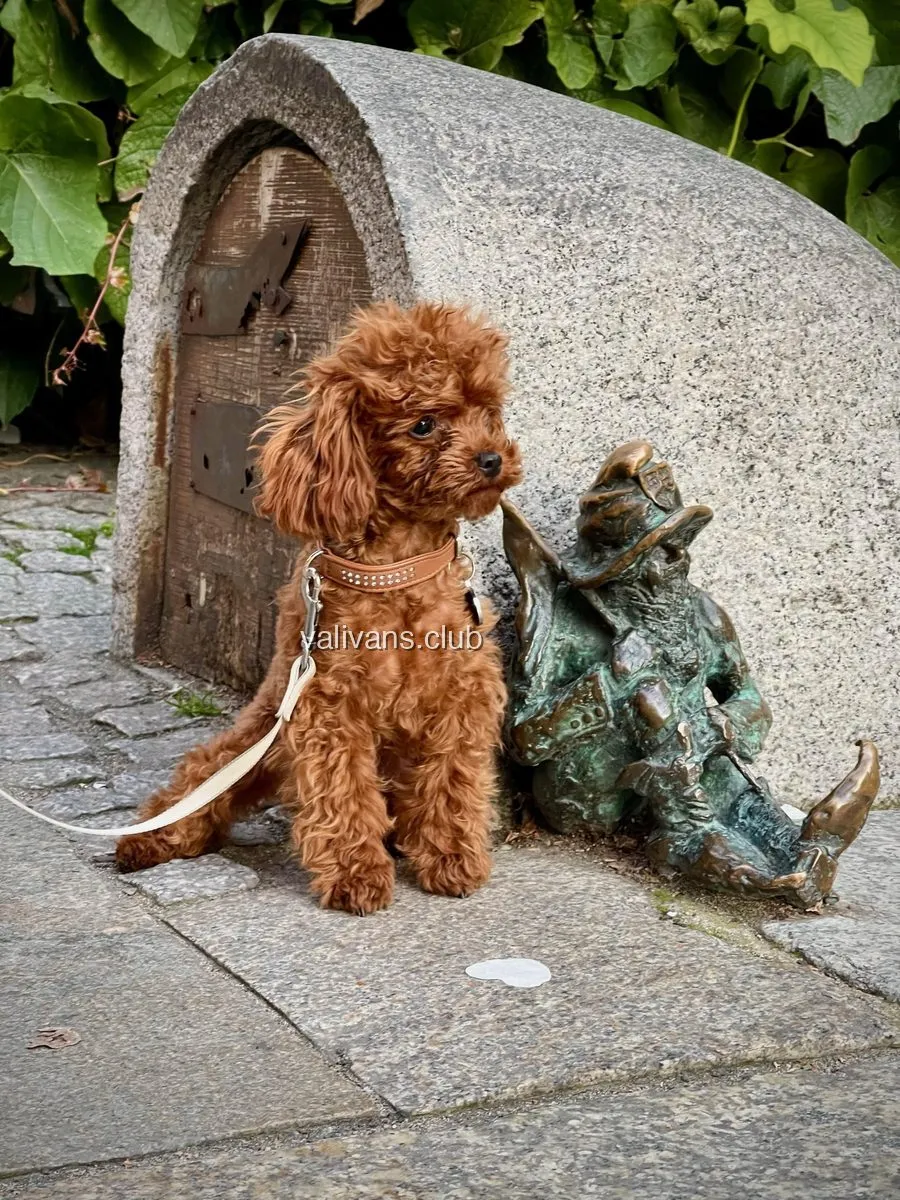
Two questions come up in almost every first email from a working household: does a Toy Poodle bark a lot, and how long can it stay home alone? Honest answer: this is an alert, people-focused breed. It notices everything and would rather be with you than without you. Neither trait is a problem if you plan for it. Below: hours by age, why a Toy Poodle barks, boredom versus separation anxiety, and a workday routine. This page is part of our Toy Poodle breed guide.
The short answer
A settled adult Toy Poodle can usually be alone for 4 to 6 hours with a walk before and after. A puppy under 3 months needs a break every 1 to 2 hours. Toy Poodles bark to alert you, and when bored; a dog with enough to do and a predictable routine is normally quiet. Barking that lasts the whole time you are gone is a sign to get help.
How Many Hours Can a Toy Poodle Be Left Alone?
Three things set the limit: the bladder, the stage of life, and how well the dog has learned that being alone is safe. A puppy physically cannot hold on for a working day, however calm it is. An adult can, but only if it has practised being alone. These ranges are what trainers commonly suggest; your own dog may need less.
| Age | Typical time alone | What it needs |
|---|---|---|
| 8–12 weeks | 1–2 hours | Toilet break, nap, someone nearby most of the day |
| 3–4 months | 2–3 hours | Toilet break, short absences practised daily |
| 4–6 months | 3–4 hours | Midday break, chew toy, settled sleeping spot |
| 6–12 months | 4–5 hours | Walk before and after, mental work in the evening |
| Adult | 4–6 hours | Routine, exercise, a dog walker on long days |
Eight hours every day is a lot for a dog this size and this attached to its people. Plenty of Toy Poodles live happily with full-time workers, but almost all get a midday visit from a neighbour, a relative or a dog walker, or go to daycare a few days a week. The household side is in our guide to the Toy Poodle in an apartment and with a family.
Do Toy Poodles Bark a Lot?
Toy Poodles are vocal, but not yappy by default. They are watchful little dogs that will tell you about the lift, the neighbour's keys and the pigeon on the balcony. Barking comes from one of five places:
- Alert barking. A sound outside, someone at the door. Normal and short: thank the dog, ask for a sit, reward the quiet.
- Boredom. A clever dog with nothing to do invents a job, and barking at the window is a job. The most common reason a Toy Poodle barks when left alone.
- Attention. Barking has worked before: someone looked, spoke or picked the dog up. Poodles learn this in a day.
- Excitement. The lead comes out, the kids come home. Harmless, and easy to redirect into a toy or a sit.
- Distress. Barking or howling that starts when you leave and keeps going. The one to take seriously; see the next section.
Reward-based training handles the first four. Shouting does not: to a dog, a raised voice sounds like you are joining in. Our Toy Poodle training guide has the basics; for the breed's character, see Toy Poodle temperament.
Barking vs Separation Anxiety: How to Tell
Most Toy Poodles that bark when alone are bored or under-exercised, and the fixes are simple. A smaller number are genuinely distressed, and for them the same fixes fail, because the problem is fear, not entertainment. The only way to know which you have is to watch: set a phone to record, leave as normal, and look at the first thirty minutes and a slice from the middle.
| Boredom or habit | Possible separation anxiety |
|---|---|
| Barks at specific sounds, then settles | Barks, whines or howls for most of the absence |
| Sleeps, chews, looks out of the window | Paces, pants, drools, cannot settle |
| Chews things left out | Scratches or chews the door, the frame or the crate |
| Accidents only when left too long | Accidents soon after you leave, despite being housetrained |
| Takes the chew you left | Ignores food until you are back |
| Calm while you get ready | Shaking or clinging as soon as you pick up keys |
If the right-hand column looks familiar, book a vet visit first: pain, a urinary problem or an age-related change can look like anxiety. Then ask the vet to recommend a qualified behaviourist. True separation anxiety responds to a structured, gradual programme, sometimes with medical support, not to a radio left on or a firmer tone. We are breeders, not vets, and no page can promise you a calm dog. The earlier it is looked at, the easier it is to help.
Teaching a Toy Poodle to Be Home Alone
The biggest mistake new owners make is kindness: the puppy comes home, someone is with it every minute for two weeks, and on Monday it is alone for six hours. Start on day one, in tiny steps.
- Make a base. A bed or an open crate in a quiet corner where the puppy naps anyway. Feed meals and give chews there.
- Leave the room. Thirty seconds, then a minute, then five, while the puppy is busy with a chew. Come back before it worries.
- Leave the flat. Door closed, two minutes, back in. Same calm face going out and coming in. No long goodbyes, no excited hellos.
- Stretch slowly. Add time over weeks, not days, and go back a step if the recording shows the puppy struggled.
- Leave something to do. A stuffed, frozen food toy or a safe long chew covers the hardest part, the first twenty minutes.
A crate helps many Toy Poodles because it feels like a den, but only if it is introduced as a good place, never as punishment, and never for longer than the bladder allows.
A Workday Routine for a Toy Poodle
Dogs cope with absence far better when the day has a shape. The routine does not have to match the clock, only the order of things. A typical weekday with an adult Toy Poodle:
- Morning: a proper walk with sniffing time, then breakfast from a puzzle feeder. A tired brain settles faster than tired legs.
- Leaving: the frozen food toy goes down as you go out. Curtains half closed if the dog barks at the street. Quiet exit.
- Midday: a visit from a neighbour, a relative or a walker for puppies, young dogs and anyone working longer than six hours.
- Evening: the second walk and some play. Five minutes of training or a scent game uses more energy than another lap of the block; our exercise guide has the daily numbers.
- Night: last toilet trip, then sleep in the same base the dog uses by day.
Keep a short absence on the weekend so Monday is not a shock. In a Spanish block of flats a barking dog is the neighbours' problem before it is yours, so a cheap camera with sound is worth having from day one.
When to Get Help
Ask for help if barking lasts most of the time you are gone, if there is damage around doors or windows, if a housetrained dog has accidents when alone, or if the dog is frightened before you have even left. Start with your vet, then a behaviourist. The easiest separation problem to fix is the one that never starts.
Thinking about a Toy Poodle for a working household?
Valivans, a Ukrainian family kennel, breeds red and apricot Toy Poodles in Valencia, Spain: UKU pedigrees (FCI-recognised), health-tested parents, puppies raised at home around everyday household life. Write to us by email or on Instagram and tell us about your routine.
Frequently Asked Questions
Toy Poodles are alert and vocal: they announce the doorbell, footsteps on the stairs and anything unusual. The rest comes from boredom, excitement or wanting attention, and a Toy Poodle with enough mental work and clear rules is usually a quiet housemate.
A healthy adult that has been taught to be alone usually manages 4 to 6 hours with a walk before and after. A young puppy needs a break every 1 to 2 hours, and a dog of 4 to 6 months every 3 to 4 hours. These are typical ranges, not rules.
Occasionally, yes, for a settled adult. As a daily pattern, 8 hours is a long stretch for a small, people-focused dog, so most full-time workers arrange a midday visit from a relative, neighbour or dog walker, or use daycare a few days a week.
Tire the dog out first, leave without a fuss, give a long-lasting chew or a stuffed food toy, and build up time alone gradually from a few minutes. Film the dog while you are out. If barking lasts most of your absence or comes with pacing, drooling or damage at the door, see your vet and a qualified behaviourist.
They are a people-oriented breed, so a Toy Poodle never taught to be alone can become distressed when it finally is. Most problems are prevented by practising short absences from the first weeks. True separation anxiety needs a vet and a behaviourist, not more training alone.