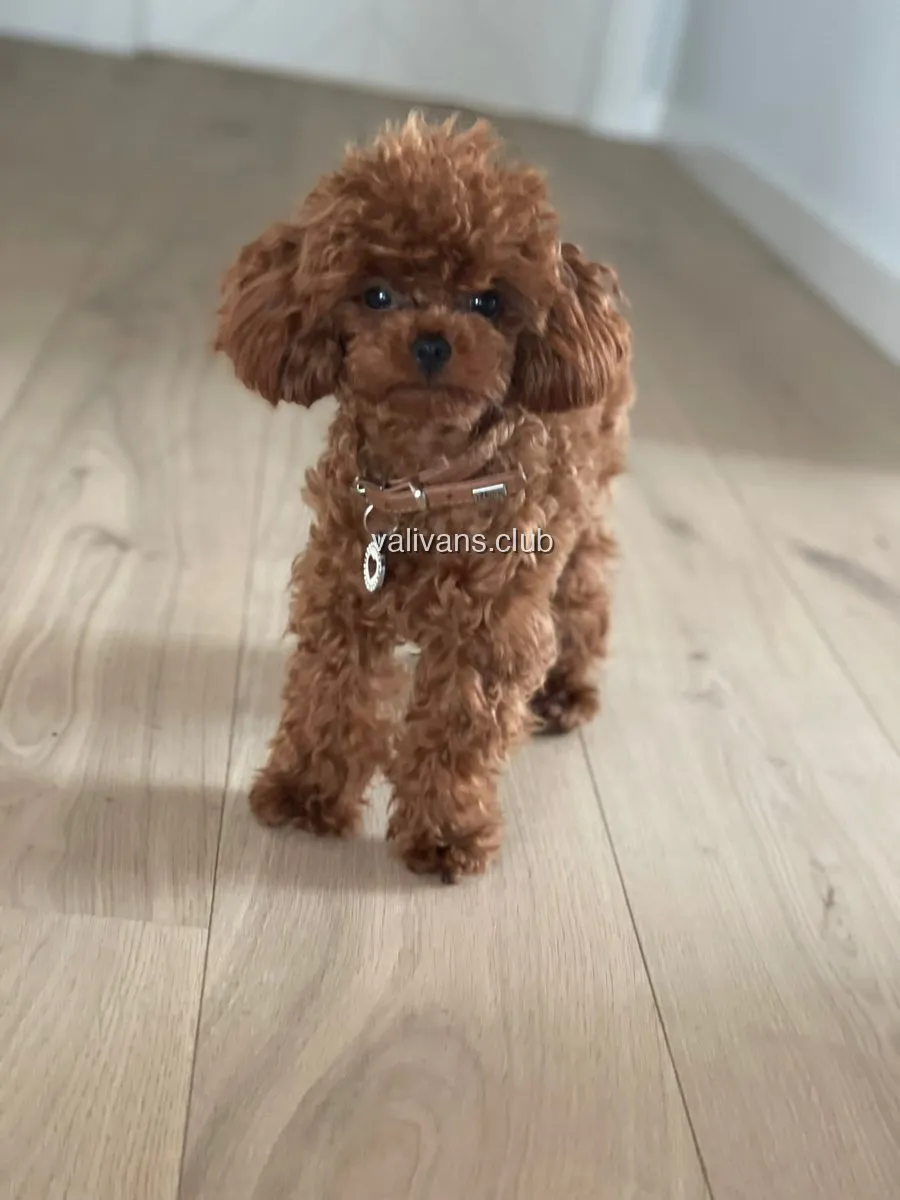
If your search has narrowed to "a small dog that does not shed much and fits in a flat", you are probably weighing the same four breeds as everyone else: the Toy Poodle, the Maltese, the Yorkshire Terrier and the Bichon Frisé. All four are purebred companion dogs under 6 kg. The differences are in the coat, the energy, the voice and the grooming you sign up for. This guide puts them side by side so you can choose on facts rather than on the cutest photo. It is part of our complete Toy Poodle breed guide.
The short version
Toy Poodle: the quickest learner, curly low-shed coat, needs a job for its brain. Maltese: the gentlest lapdog, long silky white coat that needs daily care if kept long. Yorkie: the boldest, a true terrier in a tiny body, the most likely to bark. Bichon Frisé: the sturdiest and most playful, cheerful with everyone, a coat that mats if you skip brushing.
The Four Breeds at a Glance
| Toy Poodle | Maltese | Yorkie | Bichon Frisé | |
|---|---|---|---|---|
| Height | 24–28 cm | 20–25 cm | about 20–23 cm | 25–29 cm |
| Weight | 2.5–4 kg | 3–4 kg | up to about 3.2 kg | around 5 kg |
| Coat | Curly, single, keeps growing | Long, straight, silky, single | Long, fine, silky, single | Curly, double, keeps growing |
| Colours | Many solid colours | White | Steel blue and tan | White |
| Shedding | Very low | Very low | Very low | Very low |
| Grooming | Clip every 4–6 weeks | Daily brushing if long | Daily brushing if long | Clip every 4–6 weeks |
| Character | Bright, eager, sensitive | Gentle, affectionate | Bold, alert, independent | Cheerful, playful, social |
| Barking | Moderate | Moderate | Higher | Moderate |
| Lifespan | 12–16 years | 12–15 years | 13–16 years | 12–15 years |
Size and Weight
On paper the four breeds are close, but the practical difference is real. A Toy Poodle stands 24 to 28 cm under the FCI standard and usually weighs 2.5 to 4 kg: light enough to carry, sturdy enough for a normal family home. The Maltese is a little shorter and lands in the same 3 to 4 kg range. The Yorkshire Terrier is the lightest of the group; the standard caps it at about 3.2 kg, and many pet Yorkies are under that. The Bichon Frisé is the sturdiest, 25 to 29 cm and around 5 kg, with a rounder, more compact body.
Why this matters: the lighter the dog, the more careful you have to be with stairs, jumps, small children and bigger dogs in the park. A Bichon or a Toy Poodle at the top of its range copes with a lively family more easily than a 2.5 kg Yorkie. If you have young kids, size is the first filter, not the last. For where the Toy sits against the Miniature, see our Toy vs Miniature Poodle guide.
Coat, Shedding and Allergies
This is the reason most people shortlist these four. All of them have hair that keeps growing instead of fur that drops out seasonally, so they leave very little on your sofa. The coats themselves are different, though, and that changes daily life.
- Toy Poodle: a dense, curly single coat with no undercoat. Loose hair stays trapped in the curls until you brush it out, which is why Poodles come up first in most low-shedding lists.
- Maltese: a long, straight, silky single coat, always white. It drops almost nothing but tangles easily and shows tear stains, so a white face needs daily wiping.
- Yorkie: a fine, straight, silky coat that behaves much like human hair. It grows long, parts down the back and needs the same care as the Maltese coat.
- Bichon Frisé: a soft, dense undercoat under a coarser curly outer coat. Low-shedding like the Poodle, but the double coat mats faster if brushing slips.
None of this makes any of the four hypoallergenic. Allergens live in dander and saliva, not in the hair, and people react to individual dogs differently. Before you commit, spend an hour with an adult of the breed, ideally indoors. We explain the science and the honest answer in are Toy Poodles hypoallergenic?
Budget the grooming honestly: the curly breeds need a clip every 4 to 6 weeks and brushing to the skin a few times a week; the silky breeds need daily brushing in a long coat, or a short pet trim every 4 to 8 weeks, which costs about the same time.
Temperament and Trainability
The Toy Poodle is the quick study of the group. Poodles were working retrievers before they were companions, and the Toy kept the brain: it learns cues fast, enjoys trick training and invents its own entertainment if nothing is asked of it. It is also sensitive, so a calm, consistent household suits it best.
The Maltese has been a lapdog for a couple of thousand years and it shows: gentle, affectionate, happy to spend an afternoon on a cushion, playful in short bursts. It learns well with food and patience; like most very small breeds, house-training can take a little longer.
The Yorkshire Terrier is the odd one out: a terrier bred to catch rats in mills, and the attitude survived. Yorkies are confident, curious, bossy with bigger dogs and usually the first to announce a visitor. They learn quickly but on their own terms, so short, upbeat sessions beat long drills. People who want a small dog with a big personality pick the Yorkie for exactly this.
The Bichon Frisé is the entertainer: cheerful, sociable, good with other dogs and strangers, famous for sudden laps around the living room. It trains well with rewards and does not sulk after a correction. House-training again asks for patience.
Barking, Energy and Life in a Flat
All four fit in a flat; none needs a garden. What they need is company and a routine. The Yorkie tends to be the most vocal, because alertness is what a terrier is for. The Toy Poodle and the Maltese get noisy mainly when bored or anxious; the Bichon is no watchdog but does greet. Exercise needs are modest and similar: two walks a day plus play, with the Poodle and the Bichon having the most stamina for a long weekend walk. Whichever you pick, a small dog that spends nine hours alone every day will develop problems, and that is the honest question to answer before the breed one.
Health: What to Ask Any Breeder
Each of the four has its own list of conditions that a serious breeder knows about and tests for, and the lists differ. Use them as a test of the breeder: ask what health testing the parents had and ask to see the results, ask to meet the mother and see where the puppies live, ask for the pedigree and the registration. A breeder who answers openly is worth waiting for; one who changes the subject is not, however pretty the puppy. Our own puppies come from health-tested parents, and we show the paperwork on request.
Which One Fits You?
- Choose a Toy Poodle if you want the easiest dog to train, a curly coat you are willing to clip regularly, and a companion that wants to learn things with you.
- Choose a Maltese if you want the calmest lap companion, a quieter home, and you enjoy daily brushing or will keep the coat short.
- Choose a Yorkie if you like a small dog with spirit, do not mind some barking, and want the lightest dog of the four.
- Choose a Bichon Frisé if you have a lively family, want the sturdiest of the group and a dog that loves everybody, and can commit to the grooming.
What About a Maltipoo or a Cavalier?
Two names come up in the same searches. The Maltipoo is not a breed but a Maltese × Poodle cross, less predictable in size and coat than either parent; we compare it with the purebred Toy in Toy Poodle vs Maltipoo. The Cavalier King Charles Spaniel is a slightly larger, silky-coated companion that does shed, and it suits people who want an easy-going dog without the clipping schedule. We breed Cavaliers alongside our Toy Poodles; see the Cavalier King Charles Spaniel guide.
Not Sure Which Breed Is Yours?
Valivans, a Ukrainian family kennel, breeds red and apricot Toy Poodles in Valencia, Spain: health-tested parents, puppies raised at home, UKU pedigrees (FCI-recognised). Join the waitlist and tell us about your home and routine; we will say honestly whether a Toy Poodle fits, or whether another breed would suit you better. Write by email or on Instagram.
Frequently Asked Questions
All four shed very little, which is why they appear on most low-shedding lists. Allergens live in dander and saliva rather than in hair, so no dog is 100% hypoallergenic. The Toy Poodle and the Bichon Frisé have curly coats that trap loose hair; the Maltese and the Yorkie have long, straight, hair-like coats. Spend an hour with an adult of the breed before you decide.
The Yorkie is a terrier and tends to be the most alert and vocal of the four. The Toy Poodle, Maltese and Bichon are companion breeds that mostly bark when bored or left alone too long. In every breed the individual dog, its training and its daily routine matter more than the breed average.
The Yorkshire Terrier and the Maltese are usually the lightest, both commonly under 4 kg. A Toy Poodle stands 24 to 28 cm at the shoulder and typically weighs 2.5 to 4 kg. The Bichon Frisé is the sturdiest, about 25 to 29 cm and around 5 kg.
The Toy Poodle is usually the quickest learner and enjoys having a job. The Bichon and the Maltese learn well with patience and food rewards, though house-training can take longer in very small breeds. The Yorkie is clever but more independent, so it needs consistent, short sessions.
None of the four is low-maintenance: all of them have hair that keeps growing. A Toy Poodle or a Bichon needs clipping every 4 to 6 weeks plus brushing a few times a week. A Maltese or a Yorkie kept in a short pet trim needs about the same; kept in a long coat, both need brushing every day.