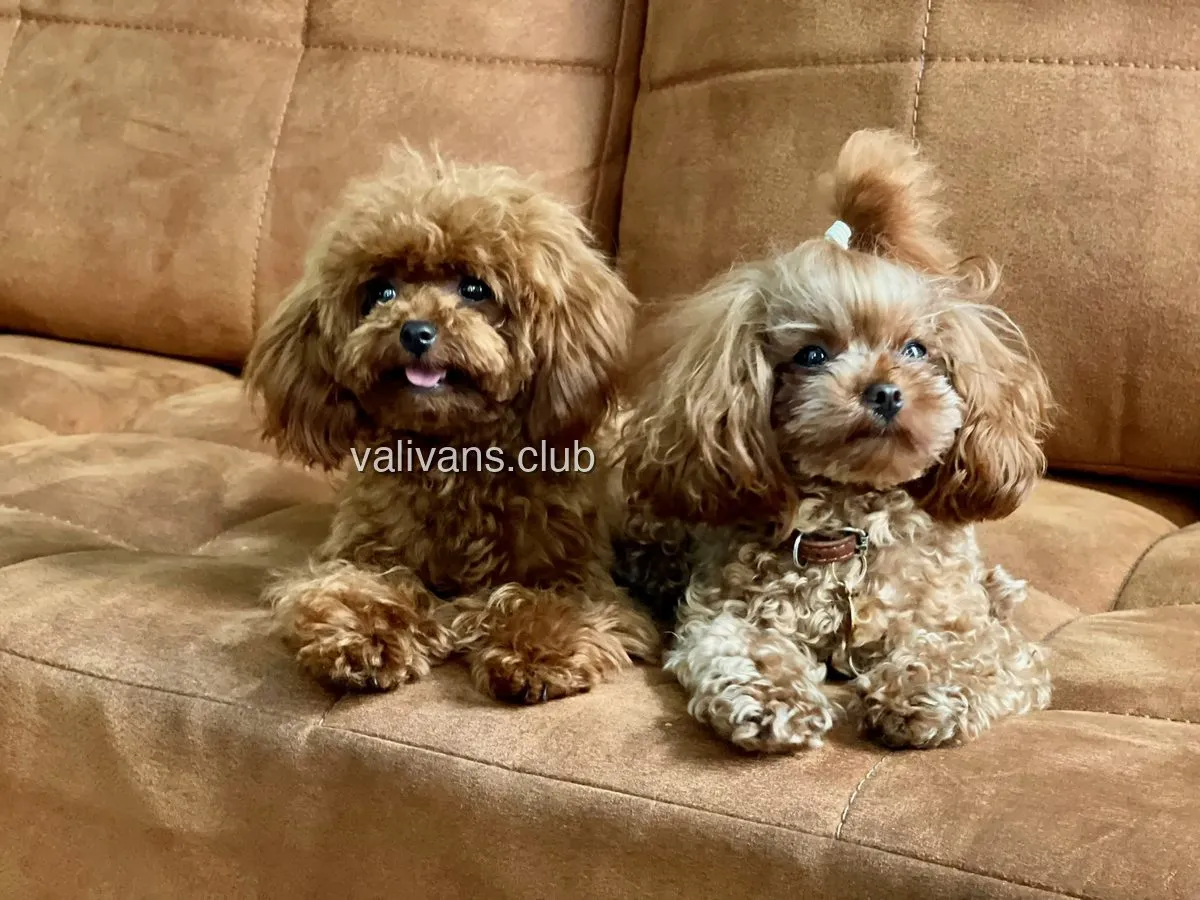
Three Toy Poodle colours raise more "will it stay like this?" questions than all the others together: silver, apricot and brown. A silver puppy is born black. An apricot puppy may finish a shade lighter than the ball of fluff you met at eight weeks. A brown coat usually holds, unless the dog also carries the gene that turns it into café au lait by its second birthday. This guide is about that change: what each colour looks like as a puppy and as an adult, what drives the shift at a general genetic level, and what the FCI standard says. For the whole palette, rarity and price, start with our Toy Poodle colours guide; this page goes deeper on the three shades that move most. It is part of our complete Toy Poodle breed guide.
The short answer
Expect change. Silver is born black and clears over roughly two years; apricot and red usually lighten; brown holds its tone unless the clearing gene is present. The best predictor of a puppy's adult coat is the adult coat of its parents, not the puppy's colour at eight weeks.
Three Colours, Two Timelines
| Colour | At 8 weeks | At 2 years | What drives it |
|---|---|---|---|
| Silver (grey) | Black, sometimes with a lighter face once clipped | Pale to medium grey, even | Progressive greying clears black pigment |
| Blue | Black | Dark slate; black that cleared only partway | The same gene, weaker effect |
| Apricot | Often deeper and brighter than the adult will keep | Warm gold, sometimes close to cream | The e/e red base, intensity modifiers, sun |
| Red | Dark mahogany to copper | Holds in good lines, drifts to apricot in others | The same base, stronger modifiers |
| Brown | Dark chocolate, liver nose | Usually still chocolate; some soften | The B locus; café au lait if the clearing gene is present |
Two different things happen in that table. Silver, blue and café au lait come from a clearing gene that strips pigment out of a dark coat over time; apricot, red and brown are stable pigment colours whose shade shifts with the adult coat, the sun and the lines. The first process is dramatic and predictable; the second is subtle and depends on the parents.
Silver and Grey: Born Black, Finished by Two
A silver Toy Poodle does not come out of the whelping box silver. The puppies are black. Breeders often get a first clue when the face and feet are clipped at around six weeks: on a puppy that is going to clear, the short hair on the muzzle often shows a lighter, steely undertone while the body is still black. From there the colour lightens from the extremities inwards. By six months the face and legs are clearly grey, by a year the body has caught up, and around the second birthday the dog settles on its final shade, anywhere from pale platinum to medium grey.
The FCI standard says grey; breeders and buyers say silver. Whatever the name, the nose, lips and eye rims stay black and the eyes stay dark, which is one way to tell a silver from a pale brown. Blue is the same process with the brakes on: a black coat that cleared only partway and finished a dark slate.
At a general level, progressive greying behaves as a dominant trait. One copy is enough, so a silver parent bred to a black can produce silver puppies, while two blacks that do not carry it will not. The same gene on a brown coat produces café au lait or silver beige instead of grey. None of this is visible in an eight-week-old; it is visible in the parents and the previous litters. A black Toy Poodle whose muzzle goes grey at eight or ten years old is not silvering, either: that is ordinary ageing, and it stays on the muzzle.
Apricot: The Light End of Red, and Why It Clears
Apricot and red are the same colour at different strengths. Both sit on the recessive e/e base that switches the coat to red-yellow pigment, and a stack of intensity modifiers decides whether the result reads as pale apricot, deep apricot or true red. That is why an apricot puppy can turn up in a litter from two reds, and why "apricot" stretches from a warm gold to something close to cream.
Most apricot puppies are born a little darker than they will finish, and the change comes in two waves. The first is the switch from puppy coat to adult coat, which in Toy Poodles usually happens between about nine and eighteen months: the soft puppy fluff gives way to the denser adult curl, and the new hair often grows in a shade lighter. The second wave comes from outside. Sun bleaches the tips of a red or apricot coat, so a dog that spends the summer on a Valencia balcony can look paler in September than it did in March, and looks richer again once a groomer trims the faded ends.
How far an apricot clears depends on the lines. Some families hold a rich gold for life; others drift towards cream by three or four. A breeder who shows you the parents as adults, and earlier litters at two years, is giving you the only real evidence there is. The deeper genetics of the red family, and how to keep a red coat rich, are in our red Toy Poodle guide.
Brown: Liver Pigment, Not Just a Dark Coat
Brown is different in kind: black pigment chemically changed, not removed or weakened. A dog that inherits the recessive brown allele from both parents (b/b at what geneticists call the B locus) makes brown eumelanin everywhere it would otherwise make black. So brown is never only a coat colour. The nose, lips, eye rims and paw pads are liver rather than black, and the eyes are amber rather than dark brown. A chocolate-looking coat with a jet-black nose is not a true brown; it is usually a very dark red.
Because the allele is recessive, two black parents can produce brown puppies if both carry it, and two browns only produce browns. Brown is born brown and, in most dogs, stays recognisably brown: the shade may shift a little with the adult coat and the sun, but the dog does not change colour. The exception is a brown that also carries the clearing gene. That dog fades, over the same two-year window as a silver, to café au lait (the colour of milky coffee) or to the greyer silver beige. Both keep the liver nose and amber eyes, which is how you tell a cleared brown from a cream or a pale apricot.
The standard asks for a warm, fairly dark and uniform brown; the pale beige tones are not what judges look for, though as pets they are as healthy and as charming as any other.
What the FCI Standard Accepts
The FCI Poodle standard (No. 172) lists the solid colours as black, white, brown, grey and fawn, with fawn divided into orange fawn, which is the apricot of everyday speech, and red fawn, which is red. All three colours in this guide are therefore standard colours; silver is simply the everyday name for grey. Since 2024 the standard also carries an "other colours" group for parti, fawn-marked (phantom), tricolour and brindle dogs, covered in our colours guide. For a pet it hardly matters; even in the show ring what counts is an even, clear adult shade, not how long it took to arrive.
How to Predict the Adult Colour Before You Choose
- Look at the parents as adults. Two three-year-olds still in deep apricot are the best sign their puppies will hold colour. If the breeder only has puppy photos, ask why.
- Ask about earlier litters. Last year's puppies at one or two years show what this pairing actually produces.
- Check the pigment, not just the coat. Nose, lips, eye rims and pads show whether a puppy carries black or brown pigment, and that does not change.
- Look at the clipped face. At six to eight weeks the short hair of the muzzle shows where a coat is heading more honestly than the fluffy body does.
- Read the pedigree for colours. Grandparents in grey or café au lait mean the clearing gene is in the family even if both parents are black.
- Accept a range. Buying for one exact shade invites disappointment; buying for a colour family (the silvers, the apricots, the browns) is realistic.
Does the Colour Change the Care?
Very little. All three are the same curly, low-shedding Poodle coat, groomed every four to six weeks like any other. Apricot, red and brown show sun fading, so shade in summer and a gentle, colour-safe shampoo help them hold their tone. Colour is not a reliable guide to health, and merle, the one pattern with a known risk, is not a natural Poodle colour (see the colours guide). Ask your vet about any coat or skin change that worries you. What protects a puppy's health is health-tested parents and a breeder who raises the litter at home, whatever the colour.
If one of these shades is the one you keep coming back to, bring the questions above to the breeder. The first weeks at home are the same in any colour; our Toy Poodle puppy guide covers them.
Drawn to Apricot?
Valivans, a Ukrainian family kennel, breeds red and apricot Toy Poodles in Valencia, Spain: UKU-registered (FCI-recognised), from health-tested parents, raised at home. Tell us which shade you have in mind when you write to us or join the waitlist, and ask us how the parents' coats look as adults.
Frequently Asked Questions
No. Silver puppies are born black and clear to grey over roughly the first two years, usually starting at the face and feet. The first hint is often a lighter undertone on the clipped muzzle at six to eight weeks.
Most lighten somewhat. The main shift comes when the puppy coat is replaced by the adult coat at around nine to eighteen months, and sun bleaches the tips on top of that. How far a dog clears depends on its lines, so the parents' adult coats are the best guide.
Both have brown (liver) pigment, with a brown nose and amber eyes. A brown keeps its chocolate shade; a café au lait is a brown that also carries the clearing gene and fades to a milky-coffee tone by about two years.
Yes. The FCI standard lists black, white, brown, grey and fawn as the solid colours, and fawn covers both apricot (orange fawn) and red (red fawn). Silver is the everyday name for grey. Since 2024 an other-colours group also covers parti, phantom, tricolour and brindle.
Only roughly. Pigment (nose, lips, eye rims) is fixed, but the coat shade is not. Look at the parents as adults, at earlier litters and at the clipped face, and expect the puppy to land somewhere in its parents' range.